
Bohemia Historical Society
Cerny’s Bakery
Four generations of Czech baking at 1165 Smithtown Avenue, 1927–2003

1927
A Master Baker from Prague
The operational history of Cerny’s Bakery is inextricably linked to the professional biography of its founder, Joseph Cerny. An immigrant from the Czech lands of the early twentieth century, Joseph arrived in the United States not as an unskilled laborer, but as a master of a highly regulated and prestigious craft. He was a classically trained craftsman who had matriculated through the Rencove Guild School for Bakers in Prague, an institution renowned for maintaining the rigorous standards of the European guild system. This educational background is a critical variable in the bakery’s eventual success; the guild system emphasized a deep understanding of yeast fermentation, thermal dynamics in masonry ovens, and the manual dexterity required for complex braiding and dough manipulation.
Upon establishing the bakery in 1927 alongside his wife, Anna, Joseph Cerny introduced a level of technical precision that stood in stark contrast to the burgeoning industrial bakeries of New York City. The Cernys adopted a “living-work” model typical of the period’s entrepreneurial families, inhabiting the upper floor of the Smithtown Avenue building while the commercial operations occupied the ground level. This physical integration of home and business allowed for the grueling schedule inherent to artisanal baking, which required the ovens to be fired and the first doughs to be prepared as early as 4:00 AM.
1932
Architectural Integrity and the Technology of the Hearth
While the business was inaugurated in 1927, the physical structure that would come to be synonymous with the Cerny legacy was a state-of-the-art brick facility completed in 1932. The architecture of 1165 Smithtown Avenue reflects the utilitarian yet dignified masonry characteristic of Bohemia’s village center, which was largely constructed by local firms such as Benedict and Swanda. The building was designed to accommodate the extreme weights and thermal requirements of a commercial bakery while providing a comfortable domestic space for a large family.
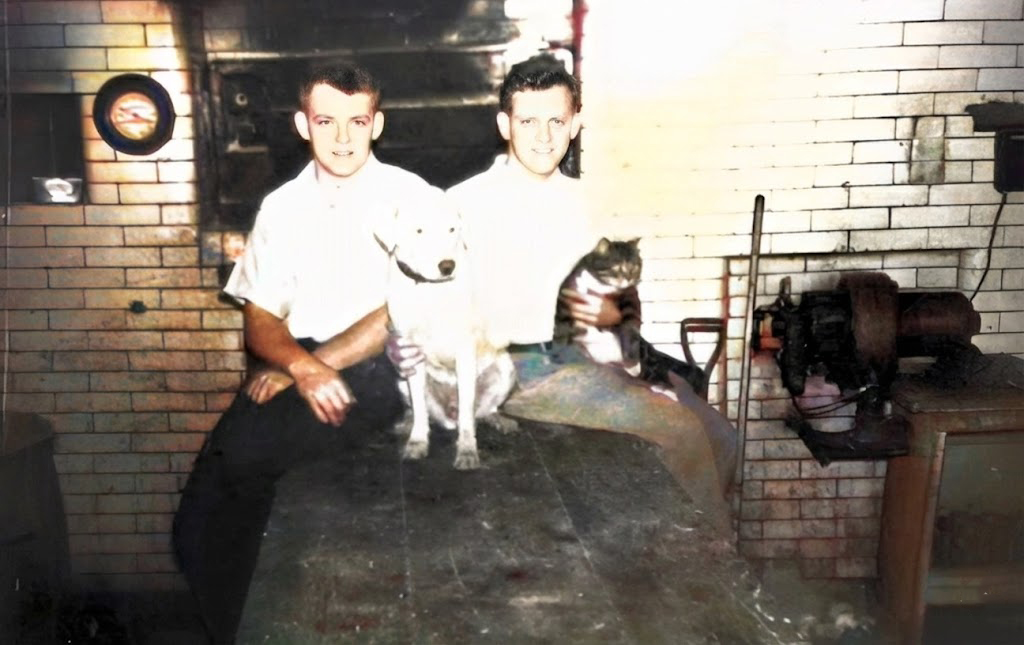
The technological heart of the operation — and the primary differentiator of its product quality — was a massive, coal-fired brick hearth oven. In an era where metal convection ovens were becoming the industry standard due to their speed and ease of use, Cerny’s maintained the traditional masonry hearth. The physics of the brick oven were essential to the “Cerny flavor”: the thick masonry walls possessed immense thermal mass, providing a steady, radiant heat that allowed for the development of a thick, caramelized crust and a moist, aerated interior. This oven was initially fired by coal, reflecting the energy landscape of the early twentieth century, before later being converted to oil and eventually gas to meet modern environmental and efficiency standards.
The significance of this oven extended beyond the production of bread. It functioned as a communal utility during the holidays. Long-standing local traditions dictated that residents with turkeys or geese too large for their modest home ovens would bring their prepared birds to Cerny’s. The bakers would utilize the residual heat of the massive hearth to roast the community’s holiday meals, a service that reinforced the bakery’s role as the “village center.” This practice exemplifies the symbiotic relationship between the artisanal business and its patron community, where the commercial infrastructure was leveraged for the common good.


The Culinary Catalog: A Study in Ethnic Preservation
For the residents of Bohemia, the items produced at 1165 Smithtown Avenue were not merely food; they were artifacts of a shared cultural heritage. The bakery’s output followed a seasonal and liturgical rhythm that mirrored the traditions of the Central European homeland.
The daily bread. The foundational product was the Czech rye bread, noted for its signature thick, crunchy crust. Historical accounts from residents describe a specific communal etiquette surrounding the consumption of this bread; children would often scoop out the soft interior dough first, saving the prized crust for the final portion of the meal. Beyond the standard loaves, the bakery produced “twisted rolls” and “salt sticks.” The twisted rolls were particularly celebrated for their richness, with many locals recalling that they were “really good” even when consumed without butter.
Seasonal specializations. The complexity of Joseph Cerny’s training was most evident in the production of enriched, braided breads. Houska, a sweet yeast bread often containing raisins and almonds, was a staple of the bakery’s repertoire. During the Christmas season, this was elevated to Vánočka, a more intricate and richer version of the braided bread that required advanced dough-handling skills to maintain the structural integrity of the multiple strands during proofing and baking. Similarly, the Easter season was marked by the production of Mazanec, a sweet bread traditionally marked with a cross. These items were central to the community’s identity, ensuring that the second and third generations of Bohemians remained connected to the specific flavors of their ancestors.
Weekly
Houska
Sweet yeast dough, raisins, almonds, three-strand braid.
Christmas
Vánočka
Enhanced richness, complex multi-tier braiding, ceremonial.
Easter
Mazanec
Sweet yeast bread, cross-marking, ritualistic significance.
Year-Round
Buchty
Sweet buns filled with jam or poppy seeds, often baked in clusters.
Year-Round
Koláčky
Circular pastries with open centers for apricot, prune, or cheese.
Year-Round
Salt Sticks
Savory snacks topped with caraway and coarse salt.

Mid-Century
The Logistics of the “Bread Route”
In the decades preceding the dominance of suburban supermarkets, Cerny’s Bakery maintained a sophisticated distribution network that effectively socialized the hamlet. The bakery utilized panel delivery trucks — often remembered as being part of a broader fleet of service vehicles in the town, including the green trucks of the Cervenka grocery — that traveled dedicated routes through Bohemia, Sayville, Oakdale, and Islip Terrace.
The operational mechanics of the “bread route” were as much about social connection as they were about commerce. Upon arriving in a neighborhood, the driver would blow a distinctive horn to signal the truck’s presence. This auditory cue prompted residents to emerge from their homes and congregate at the back of the truck, creating a temporary “third place” where news was exchanged and neighborhood ties were reinforced. For many residents, the sight and sound of the Cerny truck were the defining markers of the town’s daily rhythm.
This mobile storefront allowed the bakery to maintain a high volume of sales without requiring all patrons to visit the Smithtown Avenue facility daily. It also allowed the Cerny family to monitor the well-being of their neighbors, a tradition of community care also seen in Cyril Cervenka’s “little book” of credit during the Great Depression. The delivery service represented a high-touch, personalized form of retail that is largely absent in the modern era of anonymous large-scale commerce.
Four Generations
The Cerny Family and the Burden of History
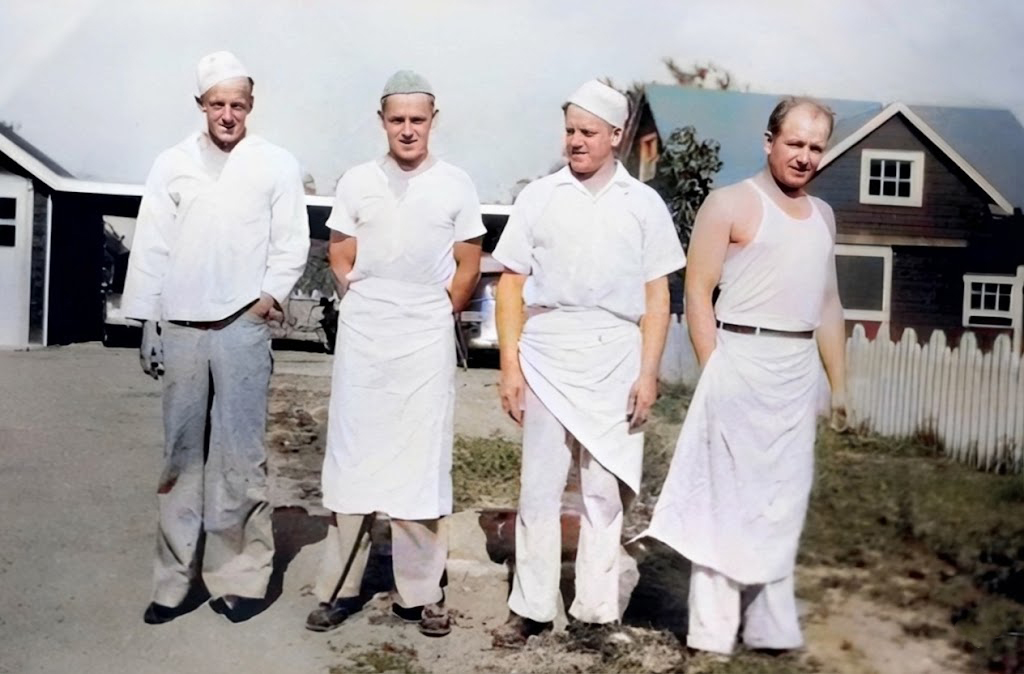
The Cerny family was a prolific and deeply integrated part of Bohemia’s social hierarchy. Joseph and Anna raised a large family that served as the labor force for the bakery, ensuring its continuity across four generations. The children of the founders — including Joseph Jr., Otakar, William, Henrietta, Geraldine, Bozena, Frederick, and Arthur — were each involved in the business to varying degrees, with many transitioning into the role of operators as Joseph Sr. aged.
The Sacrifice of Otakar Cerny and World War II
The family’s history is marked by a profound moment of national sacrifice during the Second World War. Otakar Cerny, the son of Joseph and Anna, was born on July 21, 1917, and spent his formative years working within the family enterprise. Shortly after the attack on Pearl Harbor, he enlisted in the Army and was eventually deployed to the Field Artillery in Hawaii before being transferred to the European Theatre. On June 6, 1944, Private Otakar Cerny was killed in action during the D-Day invasion of Normandy, France. This loss was felt acutely by the entire Bohemia community, transforming the Cerny family from local merchants into a symbol of the town’s contribution to the global struggle against autocracy.

The Versatility of William Cerny
Another son, William Cerny (1912–1987), also served with distinction during the conflict. His military career highlights the way artisanal skills were repurposed for the war effort. Inducted in 1942, William was initially assigned to Mitchel Field as a baker and “oven man” in the Medical Department, ensuring the troops were fed according to rigorous standards. He was later deployed to the European Theatre, serving as a Military Policeman in Heidelberg and Augsburg, Germany, before becoming a mess sergeant for the U.S.O. in Paris. Upon returning to Bohemia in 1946, William resumed his role in the family bakery, bringing with him the administrative and logistical experience gained in the Army.
Otakar Cerny — Private, Field Artillery. Killed in action June 6, 1944, Normandy, France; D-Day invasion.
William Cerny — Staff Sergeant, Baker & MP. Served in the Medical Dept. (Mitchel Field) and 7th Army HQ (Germany).
The Walking Village
Paths, Neighbors, and Traditions
Cerny’s Bakery was positioned at the nexus of several local landmarks and residential paths that defined the movement of the town’s people. To the north stood the Chateau La Boheme (the Normandie Inn), a medieval-style restaurant and former speakeasy that served as a favored destination for celebrities and socialites. The physical space between these landmarks was navigated by a series of informal paths through the woods. Long-time residents, such as the Tmay and Nocar families, recall a path leading from Locust Avenue to Walnut Avenue, and a subsequent shortcut that exited directly in front of the bakery.
These paths were more than just efficient routes for residents to reach the bakery; they were the arteries of a walking village. The fire department was another key node in this network, and the “Cerny path” allowed volunteer firemen to respond more quickly to alarms. The sensory experience of walking these paths was often dominated by the smell of the bakery, a detail that persists in the oral histories of the town.
The bakery also served as a milestone marker for the town’s children. Ordering a special birthday cake from Cerny’s was an annual rite of passage, a purchase that was as much about the social recognition of a child’s growth as it was about the consumption of a dessert. These traditions established a lifelong emotional connection between the residents and the Cerny family, which explains the profound sense of loss felt when the bakery eventually ceased operations.
1990s–2020
The Decline of Artisanal Retail and the Path to Preservation
The trajectory of Cerny’s Bakery mirrors the broader economic shifts of the late twentieth century. For over sixty years, the bakery resisted the industrialization of the food supply, but the mid-1990s brought significant challenges. The rise of one-stop-shop supermarkets and the changing demographics of Bohemia — which saw a decline in the concentration of Czech-speaking residents — eroded the traditional customer base.
The retail storefront at 1165 Smithtown Avenue officially closed in the mid-1990s, though the family continued to operate the business in a limited capacity until October 2003. The final closure marked the end of an era for Bohemia, leaving a vacuum in the community’s social fabric. Following the cessation of baking operations, the building remained a landmark, but its future was uncertain. For many years, it stood as a quiet reminder of the village’s past, eventually being converted into a private residence while maintaining its historic exterior.
In 2020, a concerted effort by the Bohemia Historical Society and the New York State Office of Parks, Recreation and Historic Preservation resulted in the building being listed on the National Register of Historic Places. This designation recognizes the building not just as a piece of real estate, but as a “rare, surviving example” of an early twentieth-century ethnic commercial bakery and residence. The listing provides a mechanism for the protection of the building’s historical features, ensuring that even if the ovens remain cold, the structure continues to serve as an educational artifact for future generations.
Share Your Cerny’s Memory
The Bohemia Historical Society is collecting stories to preserve the “human history” of this building. We want to know:
🥐 The Order: What was the one item you always bought?
🚚 The Truck: Did the delivery truck stop at your house? Who was your driver?
🎄 The Tradition: Did you have Cerny’s Houska every Christmas or Easter?